Policy Brief: The Value and Achievements of the U.S. Women, Peace, and Security Act of 2017
Overview
Since 2000, 115 governments have made formal commitments to increase women’s participation in mitigating and resolving conflict and reducing violence against women and girls. The U.S. government was the first to pass a law to codify its obligations in 2017. Support for the WPS Act has recently been called into question, despite a record of substantial achievement since its passage. Continued implementation of the law aligns with the current administration’s goals of ending wars and reducing violence, and U.S. leadership can galvanize increased international action on this front.
BY
- Linda RobinsonSenior Fellow for Women and Foreign Policy
- Noël JamesResearch Associate, Women and Foreign Policy
Introduction
In 2000, recognizing that women are leading organizers and peace-builders at local levels but rarely present at the negotiating tables to end conflict, the UN National Security Council adopted Resolution (UNSCR) 1325 [PDF], which called for member states “to ensure increased representation of women at all decision-making levels in national, regional and international institutions and mechanisms for the prevention, management, and resolution of conflict.” Violence against women in Rwanda and the Balkans in the 1990s helped galvanize global support for UNSCR 1325, which enshrined four pillars of action: prevention, protection, participation, and relief and recovery, as well as subsequent resolutions.
The argument for women’s inclusion is based on fairness as well as effectiveness: research shows that peace accords are 35 percent more likely to endure for fifteen years or more if women are part of the negotiating teams. To successfully address conflict, it is necessary to account for the perspectives of women and girls as half of the population. Research has also established that countries with high gender inequality are plagued with higher conflict, violence, and state fragility.
In 2011, the Obama administration adopted a National Action Plan to implement UNSCR 1325. Legislation to codify that effort into U.S. policy as the Women, Peace, and Security Act was introduced that year, and finally passed Congress in 2017 with bipartisan support. In the years since, the act has largely kept that bipartisan support and robust funding, though its backing has come under question during the second Trump administration.
That support should be redoubled: On the twenty fifth anniversary of UNSCR 1325, the United Nations reported areas of progress in implementing Women, Peace, and Security (WPS) agenda items, including the adoption of National Action Plans for WPS by 115 states, a doubling of women in peacekeeping operations since 2017, and fielding UN mediation teams comprised of 45 percent women. Women only comprise 7 percent of the negotiators sitting at the table, however, and no women negotiators are present in nine of ten peace processes currently underway.
Moreover, the need for continued effort is underlined by the fact that sixty-one conflicts plague the world today—a record number since World War II. The number of women and girls killed in conflicts has quadrupled [PDF] in the past two years, and verified cases of conflict-related sexual violence have increased by 25 percent in the past year to 4,600.
Rather than turn away from implementing the WPS Act of 2017, the United States should embrace it as a powerful means of pursuing its foreign policy objectives of preventing and resolving conflict. The U.S. government can pursue these aims of peace and security with greater effectiveness by combining its efforts with those of NATO and key allies who are devoting significant resources to WPS objectives.
The Women, Peace, and Security Act of 2017
The Women, Peace, and Security Act of 2017, signed by President Donald Trump on October 6, 2017, was the first law passed anywhere in the world to enshrine the key WPS principles. The U.S. WPS Act [PDF] makes it U.S. policy “to promote the meaningful participation of women in all aspects of overseas conflict prevention, management, and resolution, and post-conflict relief and recovery effort.” The law specifically requires the U.S. government to
- integrate the perspectives and interests of affected women into conflict-prevention activities and strategies;
- encourage partner governments to adopt plans to improve the meaningful participation of women in peace and security processes and decision-making institutions;
- promote the physical safety, economic security, and dignity of women and girls;
- support the equal access of women to aid distribution mechanisms and services;
- collect and analyze gender data to develop and enhance early warning systems of conflict and violence; and
- adjust policies and programs to improve outcomes in gender equality and the empowerment of women.
The law directed the executive branch to produce a strategy within a year, an updated strategy within four years, and interim reports on the efforts and impact achieved. It also mandated training for relevant U.S. defense, diplomatic, and development personnel to carry out the strategy.
In 2019, the Trump administration published the United States Strategy on Women, Peace, and Security [PDF], which aimed to accomplish the strategy’s goals of increasing women’s participation and protection through four lines of effort:
- supporting the preparation and meaningful participation of women around the world in informal and formal decision-making processes related to conflict and crisis
- promoting the worldwide protection of women and girls’ human rights, access to aid, and safety from violence, abuse, and exploitation
- adjusting U.S. international programs to improve outcomes in women’s equality and empowerment
- encouraging partner governments to adopt policies, plans, and capacity to improve the meaningful participation of women in processes connected to peace and security and decision-making institutions
In the following year, as directed by the law, the Department of Defense (DOD), Department of Homeland Security (DHS), Department of State (DOS), and U.S. Agency for International Development (USAID) each developed implementation plans to provide assistance; technical and financial support; and the assignment of roles, milestones, and metrics for evaluation.
Bipartisan Support for WPS
The WPS law has enjoyed continuous bipartisan support and funding from Congress since its inception. As U.S. senator from Florida, Marco Rubio supported the law, and as U.S. secretary of state, he restated his support as recently as April 1, 2025, saying “I was very proud to have been co-sponsor of … the first law passed by any country anywhere in the world—focused on protecting women and promoting their participation in society.”
As a U.S. representative from South Dakota, Kristi Noem, now secretary of the Department of Homeland Security, also cosponsored the WPS law. In introducing the bill in May 2017, she said, “Especially when the world is so volatile and security remains a constant concern, it’s critical we take full advantage of proven peace-building tactics, such as involving women in conflict prevention and resolution.”
Current U.S. Ambassador to the United Nations and former National Security Advisor Mike Waltz served as the cochair of the WPS Caucus during his time in the U.S. House of Representatives. He frequently invoked his military experience to champion the law, saying, “As a Green Beret I have seen firsthand that in societies where women thrive, extremism does not. Empowering women is essential to our national security. The United States must remain steadfast as a global leader in efforts to elevate women around the world.”
Uniformed military leaders have hailed the law’s operational value in furthering U.S. national security objectives. During his Senate confirmation hearings in January 2025 to become chairman of the Joint Chiefs of Staff, Lieutenant General Dan Caine testified to the utility of women’s participation to “understand the human terrain in a new and novel way and so WPS is a program that really helps us understand the full spectrum of challenges that are in front of us.”
Misperceptions and Uncertainty Regarding WPS
In April 2025, Secretary of Defense Pete Hegseth stated that he had ordered the Defense Department to reduce its role in the program to the statutory minimum and indicated he would seek to end DOD’s WPS responsibilities. His concerns appeared to revolve around the perception that the law gave special preference to women, when in fact the law leverages women’s participation in various ways to achieve U.S. policy goals. The director of the Joint Staff and the four-star combatant commanders endorsed the continuation of DOD participation as enhancing the U.S. military’s ability to accomplish strategic objectives. In a Joint Staff memorandum quoted by Lawfare, the director, Lieutenant General Doug Sims, called WPS “a low-cost, high-yield uncontested advantage over our competitors.”
During Trump’s first term, DOD officials articulated the value of WPS programs within the U.S. military sphere of operations and incorporated them into military strategy, plans, and operations. In announcing the DOD Women, Peace and Security Strategic Framework and Implementation Plan in 2020, Pentagon spokesman Jonathan Rath Hoffman said, “By recognizing the diverse roles women play across the spectrum of conflict—and by incorporating their perspectives throughout plans and operations—DOD is better equipped to promote our security, confront near-peer competitors, and defeat our adversaries.” Enlisting the efforts of women provides an advantage to the United States and its allies in an era of increased near-peer competition and conflict, as women comprise half of the population.
Implementation of WPS continued throughout the Trump administration and subsequent Biden administration. However, recent funding cuts in U.S. foreign assistance create uncertainty for the future of U.S. WPS efforts. USAID ceased functioning in September 2025, and only a few of its humanitarian assistance and other programs have been transferred to the State Department. The administration’s overall foreign assistance request for FY2026 was cut 83 percent from the FY2025 level. While the House Appropriations Committee provided $120,000,000 for WPS for FY2026 in H.R. 4779, continued disputes over government funding led to a government shutdown and delayed action on the budget.
Results of the U.S. WPS Act
The record of accomplishments since the WPS Act was passed in 2017 is substantial. WPS efforts have been carried out in dozens of conflict-affected areas around the globe including Afghanistan, Kosovo, Libya, Pakistan, the Philippines, Yemen, the Horn of Africa, and the Sahel. The ultimate goals of WPS are to promote security and reduce conflict by increasing women’s participation in conflict prevention and resolution, as well as to protect women and girls. But to achieve those objectives, those goals needed to be incorporated into the departments’ plans and operations, and personnel needed to be prepared to craft and carry them out. Thus, much effort was devoted to integrating WPS principles into strategy and training personnel to incorporate analysis of the 50 percent of the human population that is women and girls. Some 1,100 DOD personnel were trained as a gender-advisory workforce to lead that effort, in addition to training in other departments. DOS and DOD held training courses for several dozen partner governments that were developing WPS National Action Plans and supported civil-society organizations focused on grassroots conflict resolution.
Increasing Women’s Participation
WPS efforts to incorporate women in peace and security endeavors produced measurable results [PDF] in many countries. For example, in Nigeria, USAID-trained female mediators resolved 116 disputes in 6 states, and in Guinea women trained as peace ambassadors helped resolve 49 local disputes over elections. Hundreds of women were trained as peacekeepers, mediators, and participants in formal negotiations in conflict-riven countries including Afghanistan, Colombia, and Myanmar. In Colombia, women comprised 43 percent of the Revolutionary Armed Forces of Colombia (FARC) negotiating team and 20 percent of the government negotiating team; U.S. support for local peace-builders continued after the 2016 accord to implement its provisions. Another large-scale effort assisted over one-hundred thousand women and girls to engage in civic and political peace processes in Pakistan’s tribal areas. Women were also incorporated into efforts to counter youth radicalization [PDF] and violent extremism in Africa, the Balkans.
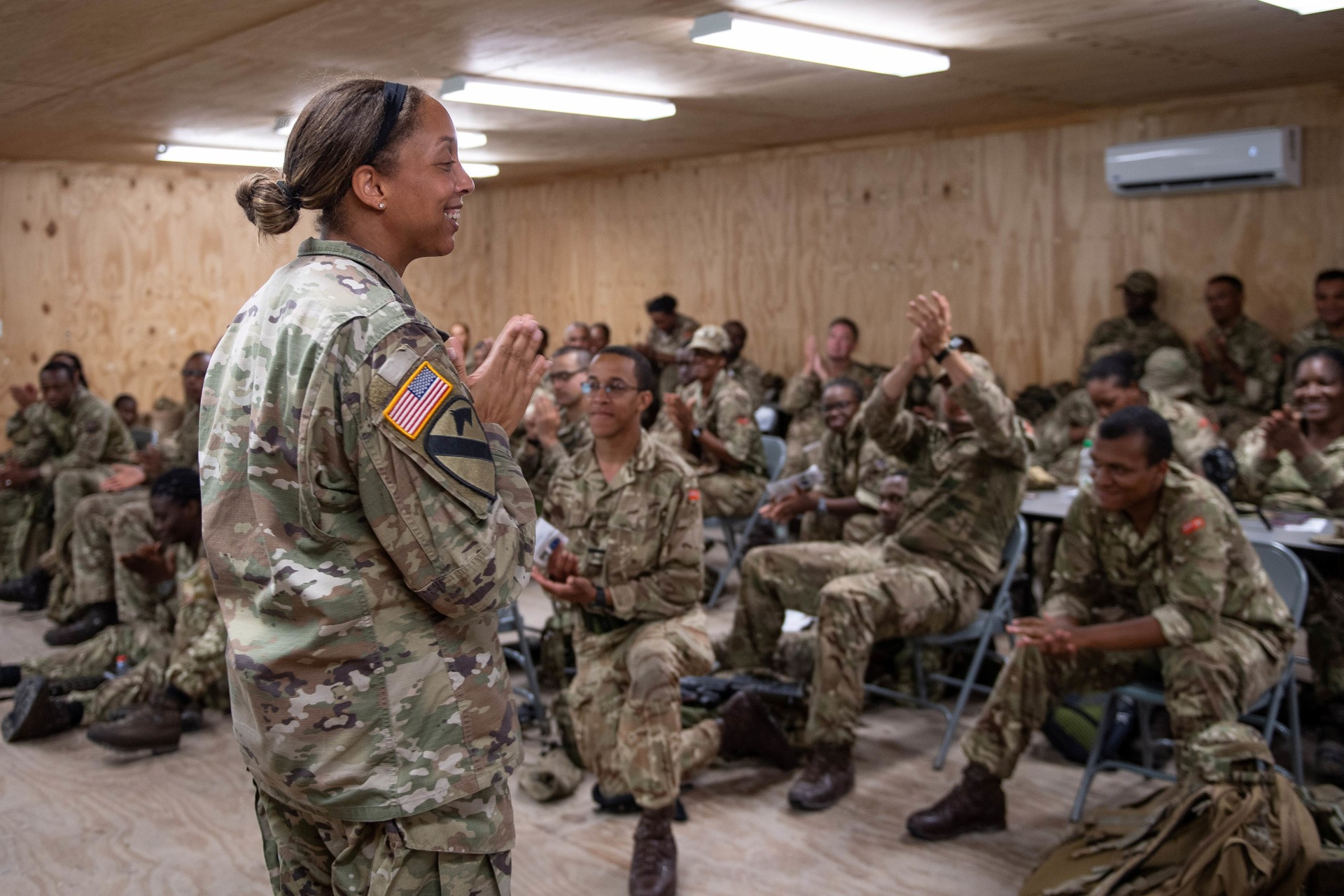
All of the U.S. regional combatant commands integrated WPS principles into exercises and training on security threats, peacekeeping, and humanitarian crises. U.S. Indo-Pacific Command, which has responsibility for U.S. military operations in thirty-eight countries with half of the world’s population, has been one of the most active in implementing WPS. It has supported the development of National Action Plans in Fiji, Papua New Guinea, and elsewhere, and cosponsored WPS seminars on measures to address food insecurity, climate change, and cyberattacks. Sharon Feist, director of WPS at U.S. Indo-Pacific Command since 2020, noted that, “WPS engagement must fit the partner and there is no one size fits all.”
By addressing issues that concern partner countries, the U.S. government gains support for collective security in a region under increasing pressure from China. The Pacific Islands are a principal focus of Chinese influence operations. Papua New Guinea, which has one of the world’s highest rates of gender-based and communal violence, has adopted a WPS National Action Plan and begun to integrate its principles into the training of its security forces. In Papua New Guinea, USAID-supported services allowed survivors of gender-based violence to open 372 investigations, and another 6,504 survivors to receive medical, legal, and mental support. Mongolia has been another active WPS partner for U.S. Indo-Pacific Command, where annual peacekeeping exercises include women and WPS advisors.
U.S. Indo-Pacific Command has taken a strategic approach to WPS by bringing a growing number of countries together each year to forge a regional effort that others help lead. In September 2025, it held the third of five planned annual two-week conferences, with seventeen countries including Australia, Bangladesh, Canada, Fiji, Japan, Malaysia, Maldives, Mongolia, New Zealand, the Philippines, Singapore, Sri Lanka, Thailand, Tonga, and Vietnam. Six of the countries serve on a steering committee to review progress and plan new initiatives. USAID was also active in promoting regional WPS efforts in Asia. Since 2019, USAID supported the development of WPS action plans through gatherings of the Association of Southeast Asian Nations as well as other WPS initiatives to support women’s needs and participation.
Other regional commands also made substantial commitments to WPS. U.S. Northern Command provided assistance to resettle Afghan refugees, including hundreds of women, and U.S. Southern Command has supported training of women peacekeepers. To remedy lack of data about the situation of women and girls in its area of responsibility, U.S. Southern Command commissioned a study [PDF] by Women in International Security to improve implementation of its WPS programs in Latin America and the Caribbean. U.S. Africa Command incorporated WPS into its annual Flintlock exercises,
The State Department’s Office of Global Women’s Issues (GWI) oversaw the department’s WPS efforts until the office was disbanded in July 2025. Like the regional combatant commands, it leveraged partner countries’ interests and resources to promote WPS objectives. In 2021 it launched a private-public rapid-response fund that provided $1.8 million to support women peace-builders in sixteen countries. In 2024, DOS and USAID secured $900 million in commitments from countries, foundations, and civil-society partners to promote women’s political leadership. DOS also established WPS Centers of Excellence in Colombia, Kosovo, and the Philippines to serve as capacity-building hubs in those regions.
Despite significant support for women in community-level peacekeeping, peace-building, and security forces, the inclusion of women in national-level peace talks has faltered. In Sudan, women were at the forefront of ousting the dictatorship in 2019 and won participation in government through the 2020 Juba Agreement. They were sidelined, however, in the Jeddah negotiations to resolve renewed war in 2023. U.S. WPS efforts supported forty-nine women-led Sudanese organizations, and in August 2024, GWI Ambassador Geeta Rao Gupta brought a delegation of twelve Sudanese women leaders to attend U.S.-sponsored talks on ceasefire mechanisms. The women called for protecting civilians against mounting atrocities, particularly gender-based violence.
Protection, Accountability, and Recovery
The U.S. government has made significant contributions through new and expanded measures to protect women from conflict-related sexual violence (CRSV); advance accountability for such crimes; and expand access to relief, recovery, and reconstruction aid. Women are the overwhelming majority of those targeted by CRSV, and they represent over half of those displaced by conflict. Given the escalating violence, the response remains inadequate to the rising need.
One of the most notable efforts to address CRSV has been to use U.S. sanctions authorities to designate those accused of rape, assault, trafficking, and other crimes against women and girls in conflict and fragile settings. In November 2022, the U.S. government announced it would use sanctions for the first time to promote accountability for perpetrators of CRSV. Since then, nearly two dozen entities and individuals have been sanctioned for CRSV in Afghanistan, the Central African Republic, the Democratic Republic of Congo, Haiti, South Sudan, Sudan, and Uzbekistan. U.S. sanction authorities direct [PDF] the freezing of assets, suspension of visas, trade bans, and other penalties for designated individuals and entities.
Since 2013, USAID and DOS have devoted $373 million to CRSV prevention and response in conflict zones. In recent years, they have assisted 5.3 million GBV survivors in forty-one countries. The USAID Expanding Access to Justice program was a five-year initiative in Somalia and Somaliland from 2018 to 2023 that gave some forty-two thousand Somali citizens, more than half of them women, legal assistance in filing cases. Overall, U.S. efforts have borne fruit. Training prosecutors, judges, and service providers to address GBV resulted in a 66 percent increase in cases transferred to courts over three years and an increase in convictions from 52 percent between 2014 and 2017 to 80 percent between 2017 and 2020.
The Department of Homeland Security increased its hiring of women to 30 percent and improved recruitment and retention through a Women in Law Enforcement mentoring program. It also improved support for human trafficking victims to access assistance, humanitarian aid, and legal resources while going through the immigration process. DHS undertook various initiatives to communicate information on services available to victims of human trafficking, gender-based violence, and female genital mutilation and cutting.
From September 2021 to February 2022, DOD and DHS provided resettlement assistance to over seventy-nine thousand Afghans, including women civil-society leaders, activists, humanitarian workers, and journalists in Operation Allies Welcome. DOD deployed twenty-eight gender advisors to eight U.S.-based military installations hosting Afghan evacuees. The advisors and the DHS Office for Civil Rights and Civil Liberties provided Afghan women and girls with access to services and assisted in their resettlement and relocation processes, including by providing information on special visa eligibility and assistance available under the Violence Against Women Act.
Contributions of Allies and Partners
A growing array of states have stepped up to lead international WPS efforts to incorporate women into peace and security decision-making and implementation. Japan has become a leading partner for WPS, adopting its first National Action Plan in 2015 and accelerating its role under former Foreign Minister Kamikawa Yōko. Under her leadership, Japan joined the United States in becoming the only two countries with a WPS caucus. In 2022, Japan devoted $7.7 billion in foreign assistance to advancing gender equality. Its Ministry of Defense has also established a headquarters for WPS promotion and a plan to incorporate it into all security operations. During 2025, Japan has conducted training events in Cambodia, Kazakhstan, and Papua New Guinea, as well as a host of seminars with other Asian partners.
With Norway, Japan co-leads the international WPS Focal Points Network, which is the mechanism for global training events and collaboration. Japan launched the WPS Himawari friends network to support recovery and reconstruction [PDF] in Ukraine. Norway, one of the first countries to adopt a WPS National Action Plan in 2006, has supported other countries’ development of WPS plans. In addition, it has convened civil-society organizations [PDF] and helped fund and launch the UN Women’s Peace and Humanitarian Fund Window to aid women human rights defenders in Afghanistan, Ethiopia, Haiti, South Sudan, and Ukraine.
Since its first WPS policy in 2007, NATO has become another international leader to promote WPS efforts among its thirty-two member states and forty-plus nonmember partners. In 2024, the Secretary-General’s Special Representative for Women, Peace and Security Irene Fellin coordinated a revised WPS policy outlining the strategic objectives of gender-responsive leadership and accountability, participation, prevention, and protection for all member states. NATO has also incorporated WPS principles into core missions of its Strategic Concept. The policy supports the deployment of gender advisors and gender focal points to provide training courses and collaborate with allies to draft national action plans. In 2024, NATO allies contributed to providing Ukrainian female soldiers, one-fifth of the force, with women’s body armor, boots, and uniforms.
The Case for Continuing U.S. WPS Leadership
Trump has expressed his desire to end wars as a major objective of his second term, and Waltz has said that the administration seeks the United Nations’ return to its primary focus on international peace and security. For both reasons, the Trump administration should not only reaffirm its commitment to WPS but also increase funding and efforts to build on the progress WPS has made in the past decade of implementation.
The United States can spur greater contributions from others by continuing its own efforts. By setting this example, U.S. leadership can energize other countries to do more to prioritize funding and implementation of their national action plans. Such burden sharing will compound the force-multiplying effects of WPS.
Including women at all levels of conflict resolution and peacemaking will substantially accelerate the achievement of U.S. foreign policy objectives. The untapped talent and dedication of half of the population represents a tremendous force multiplier. Women bring significant understanding of both the local conditions that give rise to conflicts and the needed solutions. Including them at the negotiation tables of peace processes around the world will greatly enhance accords’ chances of success and durability through just and comprehensive terms.
Ending wars and violence has been a prominent theme of the second Trump administration. Both President Trump and First Lady Melania Trump have expressed personal outrage at the war crimes and atrocities committed against women and children, as well as an eagerness to cease hostilities. First Lady Trump personally interceded with Russian President Vladimir Putin to return the estimated twenty thousand Ukrainian children that were forcibly transferred to Russian-held territory or Russia. The WPS Act provides substantial legal support to achieve these aims.
Finally, bipartisan support in Congress remains strong, as evidenced by the continued funding of WPS since the 2017 act was passed. The WPS Caucus in the House of Representatives—cochaired by Representative Lois Frankel (D-FL) and Representative Jan Kiggans (R-VA), who is a former naval aviator—continues to exercise oversight, along with the relevant congressional committees. Senate support also remains strong, with Senator Jeanne Shaheen (D-NH), an original sponsor of WPS legislation, and Senator Shelley Moore Capito (R-WV) overseeing Senate passage of the act.
Recommendations to Improve WPS Outcomes
The rationale to continue WPS remains as strong, or stronger, than when the WPS Act was enacted. That said, several improvements are necessary to make more progress quickly.
First, funding should be restored to previous levels to maintain momentum on key initiatives. The United States can negotiate additional contributions with key stakeholders, provided the country is also willing to increase its contributions to meet the heightened level of conflict, violence, casualties, and recovery costs.
Reaffirming the importance of the WPS Act as a legal instrument will establish the needed long-term horizon for this effort. With sixty-one conflicts around the world, prioritization is inevitably needed to address the direst humanitarian situations, but conflict prevention will require sustained investment to keep embers from turning into conflagrations.
With such a commitment, the United States will be on firmer ground to seek concrete, binding commitments from the parties at the negotiating table. In addition, recipients of foreign assistance can be pressed to commit to implementing their National Action Plans on a specific timeline with requisite resources. Implementation of key provisions of the 115 National Action Plans has languished, and U.S. support can prod governments to move more quickly to fulfill their terms.
Internally, the gender advisor force in the U.S. government will need to be refreshed as careers progress and positions change, and new leaders and their executive teams will need continued training to ensure they understand the basic WPS principles, objectives, and best practices. It would be unfortunate if the momentum for progress were lost after the investments of the past decade in personnel, plans, and implementation have begun to bear fruit.
In the same vein, restoring the ambassador-level global women’s issues position is needed to coordinate efforts across bureaus and the interagency community, given that no such position currently exists at the National Security Council.
Congress should continue to assert oversight to ensure that the provisions of the WPS Act are implemented and coordinated with the Global Fragility Act of 2019 and the Elie Wiesel Genocide and Atrocity Prevention Act of 2018.
Although much remains to be done, the record of the WPS Act’s implementation provides ample justification for continued efforts under the law. Sufficient bipartisan support exists for renewing the commitment to WPS and expanding partnerships with countries and organizations that have invested in a safer future for women and girls.
Acknowledgments
Ananya Rao is the intern for the Women and Foreign Policy Program and contributed to the research for this policy brief.t